IP Broadcasting : Why Does it Matters?
IP Broadcasting is redefining broadcasting landscape, which was previously dominated by legacy hardware systems. This technology enables high operational flexibility and efficiency, which makes it popular across broadcasting industry. Is that all? No, but there is more to it than that. This post discusses how IP is making a mark in different areas of broadcasting.

Why IP Broadcasting?
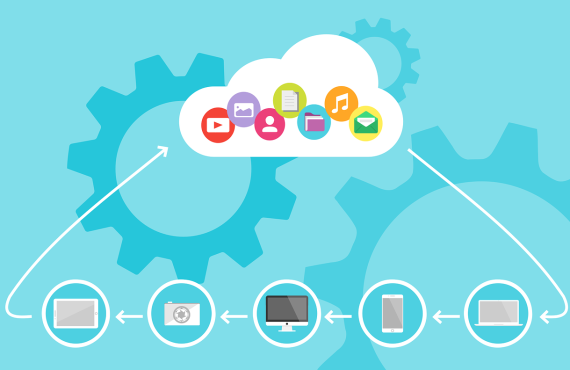
Content Distribution: This is the most discussed benefit of IP broadcasting. Until a few years back, SDI switches and cables were a standard of digital data distribution. The common data speed was 270 Mbps, whereas 540Mbps was ideally possible. Today, broadcasters are using broadcast IP-based infrastructure such as ethernet networks to stream data. These new solutions are cost effective, easy to build, and are maintenance-free too. Thus, they provide broadcasters greater capacity and flexibility, which enables them to attract unique customers, and run their businesses more effectively.
Many industry experts agree that this shift is being introduced by Over-the-Top service providers such as Amazon Prime, and Netflix because consumers are adopting mobile or computer-based platforms. Hence, it has become inevitable for broadcasters to adopt software-based broadcast IP platforms over legacy hardware-based baseband video to remain competitive.
Control Rooms: In studio control rooms, the traditional audio/visual equipment (AV) are becoming a rare sight. They are being slowly paving way for the advanced IP-based keyboard, video, and mouse (KVM) technology. These equipment allow operators to switch between different streams, as well as control various other aspects of broadcasting effortlessly from a single input. Also, the right KVM systems will allow an editor to switch video signals without a quality degradation.
Unlike the traditional AV systems, KVM systems can be placed outside the studio room, and it helps reduce heat in the environment. Also, this helps improve the service life of computers because they are no more stacked in the server room. Operators can easily access their systems using high-performance IP-based KVM without a loss of quality while handling the content.
Post Production: In the post-production suite, KVM transforms the work environment for achieving better control and productivity. It provides the comfort of aligning the machines to a server room. As in the traditional console environment, the server room can be easily secured with a controlled access. This means only staff or employees with right credentials can access the server room.
KVM helps create an editing suite to suit specific project requirements. The clients can easily switch between their various resources easily. Unlike traditional systems, KVM-based editing suite can be configured as per the project requirements. This helps reduce dependency on technical staff, who are otherwise required to make constant changes or apply patches in traditional systems.
IP-controlled KVM and other examples discussed above show the adoption of IP in the broadcasting industry. It shows that IP broadcasting is cost-effective technology which offers best ROI, and flexibility. It allows broadcasters, as well as operators, to operate easily from the studio environment or their OB suite. They can easily switch between different machines that might be separated by a great distance using a single IP-based mouse, and a keyboard. Summing up, this all means IP based broadcasting is already here, and is not anymore the proposed technology of the future.