5 Key Broadcast Technology Trends 2017
2016 is now referred as “last year”, and at RGB, we are focusing on key broadcast and media technology trends that will drive our broadcast and media industry in the current year 2017. After discussions with our clients, and analyzing ongoing trends, we are focusing on the 5 broadcast technology trends that will play important role in 2017.
- Live Streaming is the new Revenue Booster: 2016 was the year of Live Streaming. Facebook Live became a phenomenon, and Twitter created history with Live Streaming of NFL games. However, industry experts are of the opinion that Live Ads are soon going to be a reality. In 2017, live ad monetization standards will be established. This will drive broadcasters to redesign their advertisements for better revenues.
- Drone Racing is the new Sport : Until 2016, drones were used by major sports broadcasters to cover sports events. However, in 2017 the drone scene will become more entertaining. Major sports broadcasters like ESPN, Eurosport, and Sky – are gearing up for drone racing competitions to attract the young audience. Sky and ESPN have already signed $1million deal with the Drone Sports Association to broadcast Drone Racing League on its Sky Sports Mix channel.
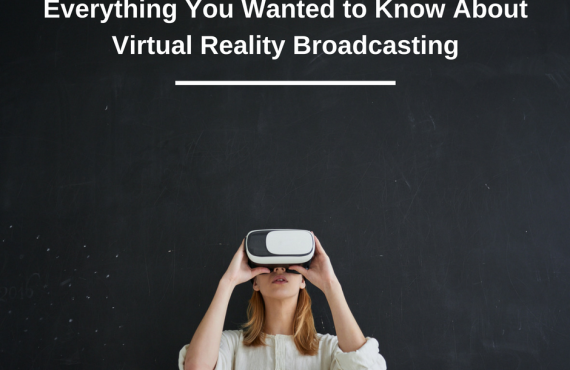
- VR and AR will be Integrated with TV: Virtual Reality (VR) and Augmented Reality ( AR) will move to a bigger platform – TV. Fox TV has already streamed NASCAR, the US Open Golf, and the NBA in VR. However, the AR is where graphics will be laid on live streamed content. The AR will simplify the viewing experience. For example, people can understand complex rules of game, and sports action by viewing animations or listening to commentary from sports pundits.
Television needs to be upgraded to 3D or HD platforms to cope up with AR and VR technologies.Nowadays, Ultra HD televisions are gaining quotecorner.com/online-pharmacy.html popularity. The Ultra HD refers to two resolutions – 4K Ultra HD (3840 x 2160px) and 8 K Ultra HD ( 7680 x 4320). Various studies suggest that more than 75% of US households have at least one HDTV. Hence, several sports broadcasters and entertainment studios are devising show formats for 4K Ultra HD viewing. NHK Japan is gearing up for 8K streaming at the 2020 Tokyo Olympics. 8K technology is still in stages of infancy, and may be several light years away before it finally reaches your television screens. - Software Defined Broadcasting: In 2016, software defined broadcasting was introduced. This provides much flexibility, and opportunity for those managing, and building broadcasting systems. Currently, the software products are used for VR implementations, but they will be expanded to microservices based architecture, and container based models. However, these changes are not going to be easy. They will require significant redesigning to the existing software designs. Software defined broadcasting promises to return greater levels of control over implementation, and flexibility.
- IP Minded Broadcasting Infrastructures: In 2016, we have seen a shift towards IP minded infrastructure in broadcasting and studio facilities. Development of protocols such as SMPTE 2022.6 is the first step towards it. Implementing SDI over IP is a major step, but the broadcasters and studio facilities are already working on native IP implementation based on the reference of SMPTE, AMWA, and VSF. No doubt, there will be more focus on IP minded broadcasting infrastructure in 2017 too.
All the above-mentioned broadcast technology trends suggest that broadcast technology evolution will be faster than 2016. The challenge for us at RGB is to leverage these broadcast and media technology trends for better outcomes, and better audience engagement in a highly competitive industry.